She Scored 152 on GRE Quant Twice. Three Weeks Later She Got 160.
Khushi Kaul. Scored 152 on GRE Quant twice. Three weeks later she scored 160.
Khushi had done everything right. She had studied. Practiced hundreds of questions. Reviewed her mistakes. Taken the GRE. Got 152. Studied more. Taken it again. Got 152 again.
After the second attempt, she wrote to me and said she was trying not to keep her hopes too high. She had a dream program in mind. It required a 158 minimum in Quant. And she was starting to believe she might just not be capable of getting there.
Three weeks later, she scored 160.
This is that story. Not a miracle. Not a magic method. Just a very specific diagnosis of what was actually going wrong, and three weeks of working on exactly that.
The problem with consistent practice that goes nowhere
Khushi is not a lazy student. She is the opposite of a lazy student. She was putting in genuine effort, and still ending up in the same place. That kind of plateau is its own particular hell, because you can not even blame yourself for not trying hard enough.
Practice in the Dark
This is one of the most common things I hear from students who come to me stuck at a score. The issue is almost never effort. It is almost always that the practice is happening in the dark. You are doing questions, getting some wrong, reviewing the answer, moving on. Repeat for weeks. The score does not move because nothing is being diagnosed. You are just accruing hours without accruing understanding.
Khushi had another layer on top of this: exam anxiety. She knew the concepts in a quiet room. Under test conditions with the clock running, something shifted.
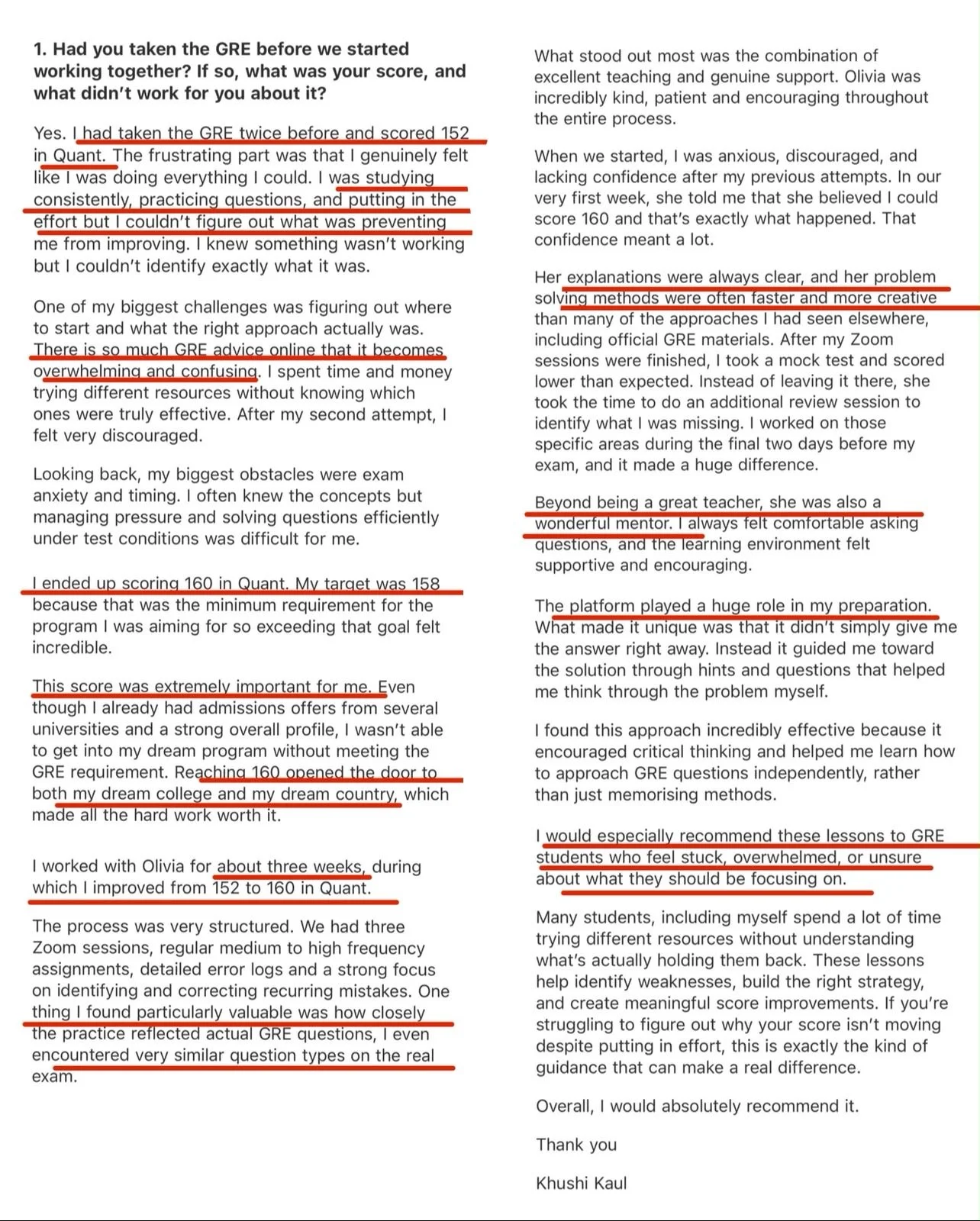
“The frustrating part was that I genuinely felt like I was doing everything I could. I was studying consistently, practicing questions, and putting in the effort, but I couldn’t figure out what was preventing me from improving. I knew something wasn’t working but I couldn’t identify exactly what it was.”
Score Plateau, Test Anxiety, and a Dream on the Line
That combination, a score plateau plus test anxiety, is genuinely discouraging. By the time she reached out to me, she had admissions offers from several universities. She had a strong overall profile. The GRE was the one thing standing between her and the program she actually wanted. And she was starting to feel like it might stay that way.
“My biggest obstacles were exam anxiety and timing. I often knew the concepts but managing pressure and solving questions efficiently under test conditions was difficult for me.”
What three weeks of targeted GRE prep looked like
We had three Zoom sessions. That was the whole coaching relationship, in terms of time together. In the first session, I did not give her a study plan. I asked her to walk me through some of the questions she had gotten wrong recently, and I watched how she approached them. Within about twenty minutes, a pattern was visible.
She was not reading the full question before setting up her approach. She was jumping into solving before she fully understood what was being asked. On easy questions, this did not matter. On harder questions, it meant she was solving for the wrong thing entirely and arriving at an answer that looked plausible but was wrong. The answer would often be one of the trap choices. This is not a math problem. It is a process problem. And it is fixable.
“The process was very structured. We had three Zoom sessions, regular assignments, detailed error logs and a strong focus on identifying and correcting recurring mistakes. One thing I found particularly valuable was how closely the practice reflected actual GRE questions. I even encountered very similar question types on the real exam.”
Three days before the exam, everything nearly fell apart
With three days to go, Khushi took a full mock test. She scored lower than expected.
I want to be honest about what that moment feels like, because if you have been there, you know. It is one of the worst possible timings for a bad result. Everything you have worked on feels suddenly fragile. The exam is days away. There is no time to rebuild anything. A lot of students at that point just try to cram everything they have not reviewed, or they spiral into anxiety and walk in underprepared.
Khushi did not do either of those things. We did an extra session instead.
“What made it unique was that it didn’t simply give me the answer right away. Instead it guided me toward the solution through hints and questions that helped me think through the problem myself. I found this approach incredibly effective because it encouraged critical thinking and helped me learn how to approach GRE questions independently, rather than just memorising methods.”
Handling pre-exam anxiety
We went through the mock in detail. Found three specific question types that had gone wrong. Khushi spent the final two days drilling only those. Not everything she had ever learned. Just the gaps we could see clearly in the data.
On exam day, she scored 160.
“Instead of leaving it there, she took the time to do an additional review session to identify what I was missing. I worked on those specific areas during the final two days before my exam, and it made a huge difference.”
What actually gets a stuck GRE score moving
I want to be clear about something: Khushi did not get smarter at maths in three weeks. Her mathematical ability was already there. What she got was a map of where her points were going.
Most students who plateau on GRE Quant are not lacking knowledge. They are lacking a diagnosis. They know roughly what topics are on the test. They can solve many of the questions. But they are losing points to a specific set of repeating errors, and they do not know what those errors are, so they keep practicing without fixing them.
The shift is almost always the same: stop practicing more, start understanding why.
“The score she needed was 158. She had been stuck at 152 for two attempts. She ended up at 160. That two-point buffer above the minimum meant she got into the program she had been trying to reach for months. The one that required a specific GRE Quant score to even be considered.”
One thing Khushi said that stayed with me
In her first message to me, Khushi mentioned that she was trying not to keep her hopes too high. She had been disappointed twice. She did not want to set herself up for a third time.
In the first week of working together, I told her I thought she could score 160. I was not saying it to be encouraging. I had looked at her errors and I could see they were all in a small, fixable category. She had the foundation. She was not starting from scratch. She just needed someone to hand her the map.
“Many students, including myself, spend a lot of time trying different resources without understanding what’s actually holding them back. These lessons help identify weaknesses, build the right strategy, and create meaningful score improvements. If you’re struggling to figure out why your score isn’t moving despite putting in effort, this is exactly the kind of guidance that can make a real difference.”
Fixable. If You Know What to Look For
I still think about that first message she sent, trying not to keep her hopes too high. Sometimes the thing holding a student back is not skill or effort. It is not knowing that the thing is fixable. That with the right diagnosis, the score they think they cannot reach is actually just weeks away.
“When we started, I was anxious, discouraged, and lacking confidence after my previous attempts. In our very first week, she told me that she believed I could score 160, and that’s exactly what happened. That confidence meant a lot.””
Frequently asked questions about improving a stuck GRE Quant score
How long does it actually take to improve your GRE Quant score?
It depends entirely on what is causing the plateau. Khushi improved 8 points in three weeks because her errors fell into a small, identifiable set of patterns. If your mistakes have a common root cause and that root cause is fixable, two to four weeks of targeted work can produce real movement. If there are deeper concept gaps, expect six to ten weeks.
Why is my GRE Quant score not improving despite all the practice I am doing?
Because practice without error analysis almost never breaks a score plateau. If you are getting questions wrong for the same underlying reasons and not identifying what those reasons are, you are practicing the same habits you already have. The fix is a detailed error log that breaks your mistakes down by type, not just marks them as wrong.
Is 160 a good GRE Quant score?
A 160 on GRE Quant is around the 70th percentile. For most graduate programs in business, social sciences, and the humanities, it is a competitive score. Programs in engineering, data science, and quantitative fields typically see admitted students scoring 163 to 168. The right target depends on your specific programs.
Do I need a GRE tutor or can I improve on my own?
You can improve on your own if you are disciplined about error analysis and starting relatively fresh. Where a GRE tutor makes the most difference is when you have been practicing consistently and the score is not moving. At that point, the issue is usually something you cannot see from inside your own prep. An outside read on your error patterns tends to unlock things that months of self-study did not.
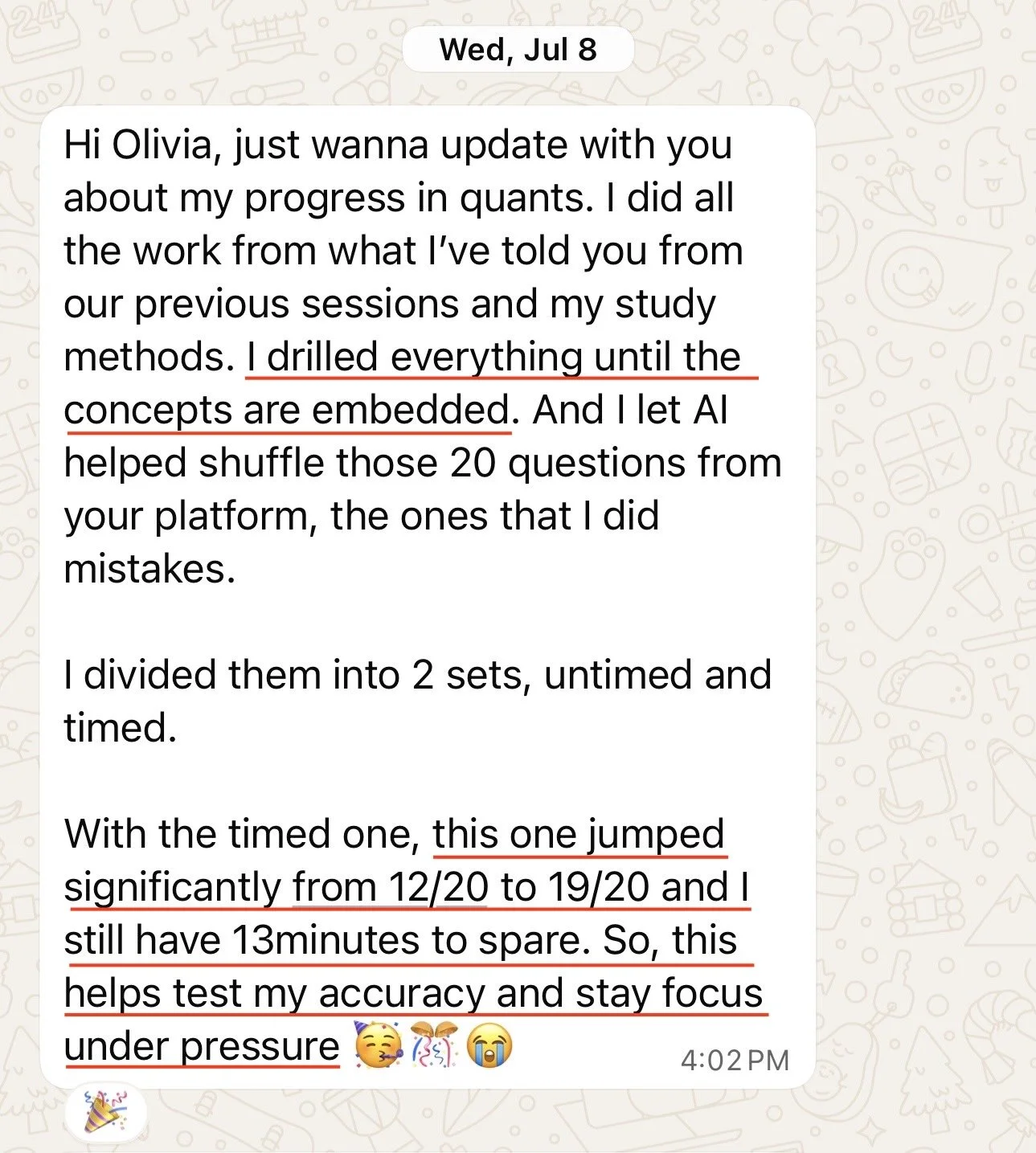
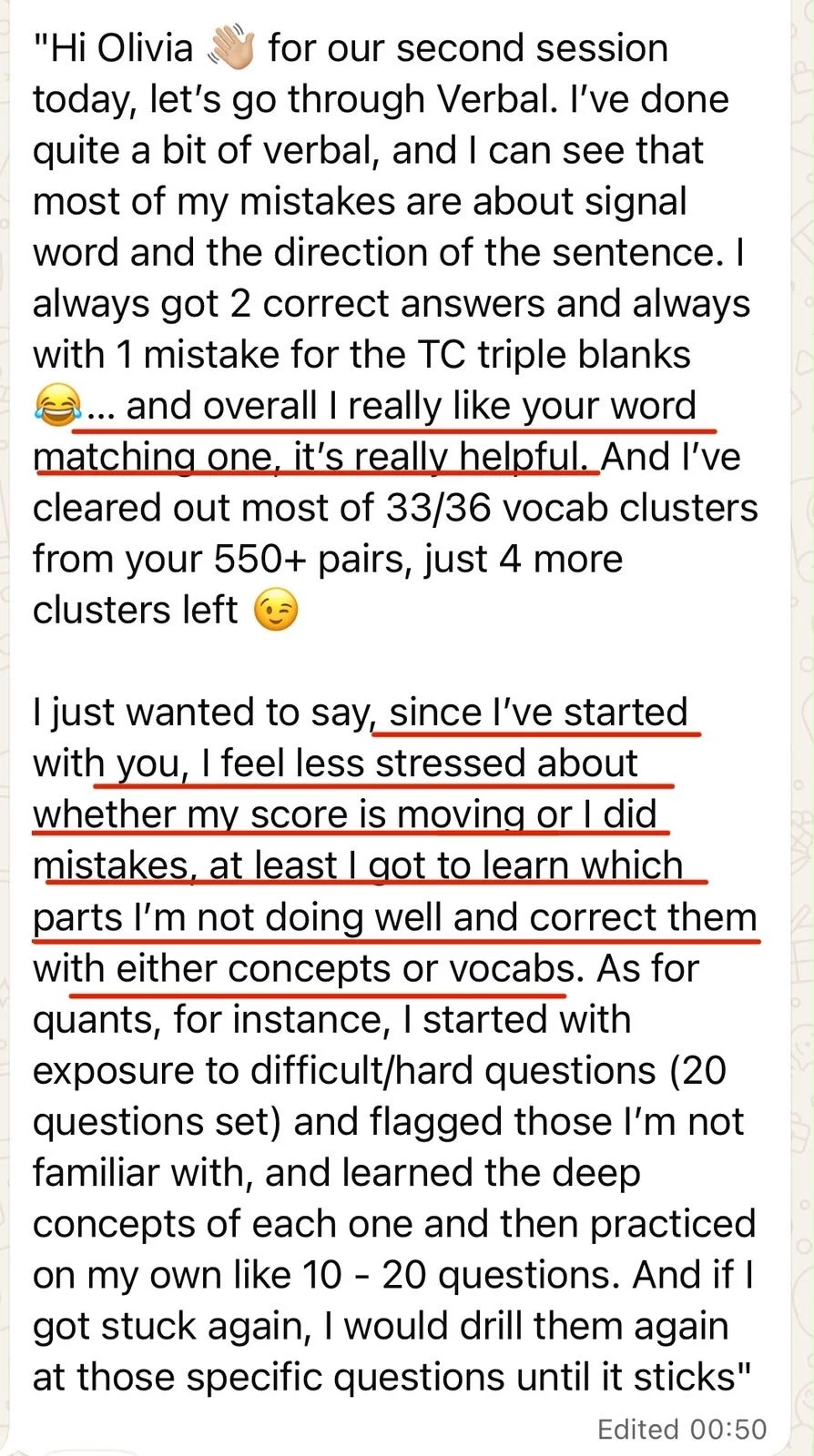
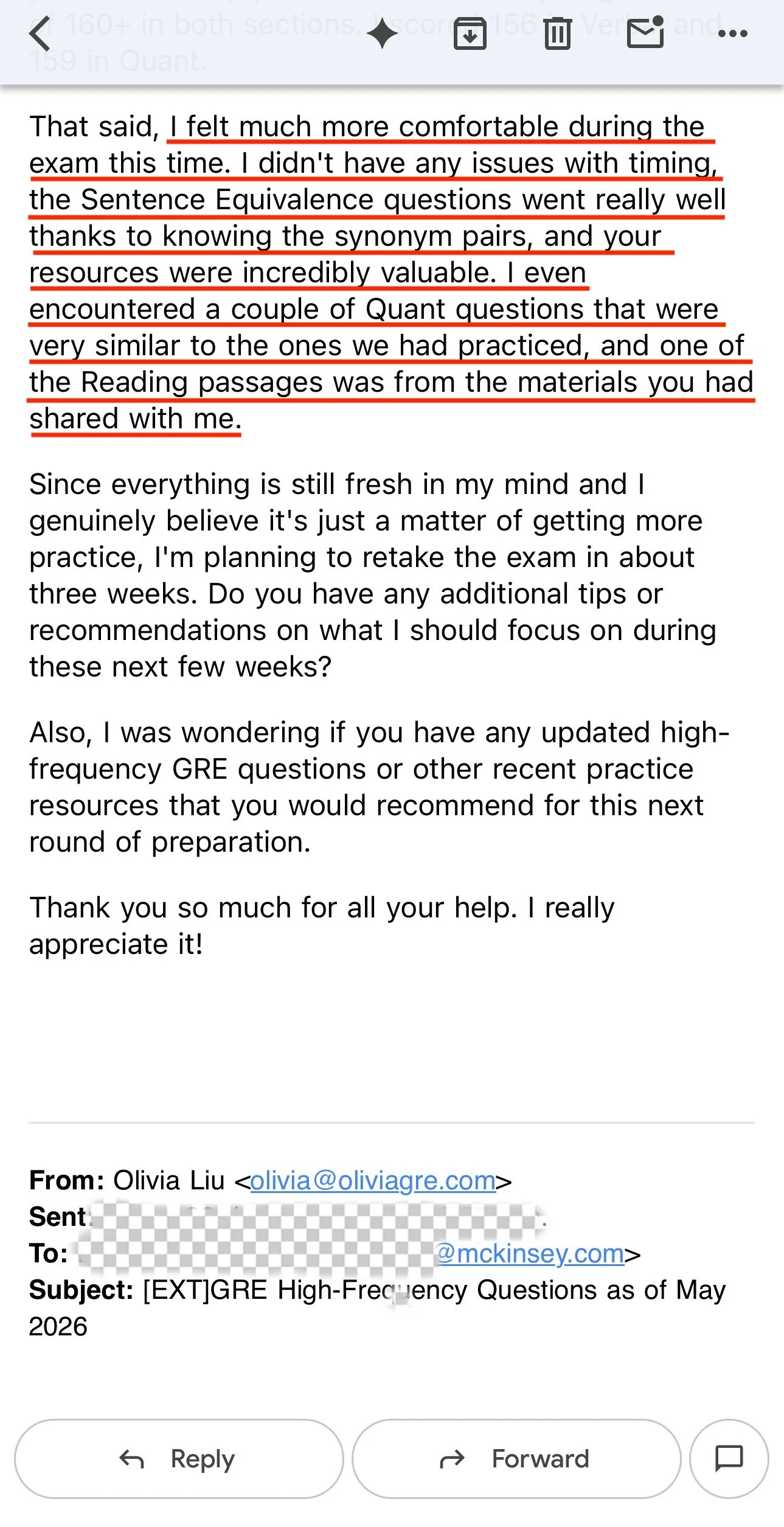
What My Students Are Saying
BOOK YOUR TRIAL LESSON TODAY
Your score is probably closer than you think
If you have been putting in the work and the GRE Quant score is not moving, the issue is almost always diagnosable. The free 60-minute trial is where we find it. You walk away knowing exactly what is holding you back, regardless of what happens next.
